Your Ford is designed for performance, efficiency, and longevity—but only if its essential components are well-maintained. One of the most overlooked yet critical parts of your vehicle’s health is its filters. Whether it’s your engine air filter, oil filter, fuel filter, or cabin air filter, neglecting them can lead to costly repairs and reduced performance. Knowing the signs of a clogged or failing filter can save you time, money, and frustration.
1. Decreased Fuel Efficiency
A sudden drop in gas mileage often signals a dirty air or fuel filter. When these filters become clogged, your engine has to work harder, consuming more fuel in the process. If you’re filling up more frequently than usual, it may be time to check and replace your filters.
2. Reduced Engine Performance
If your Ford struggles to accelerate, hesitates, or feels sluggish, a dirty air or fuel filter could be the culprit. A clogged air filter limits the amount of clean air entering the engine, leading to poor combustion, while a restricted fuel filter disrupts fuel flow. Both issues affect overall performance.
3. Unusual Engine Noises
A filter that’s past its prime can cause your engine to run rough or even misfire. Listen for coughing, sputtering, or knocking sounds—these could indicate that your engine isn’t receiving the proper air-fuel mixture due to a clogged filter.
4. Check Engine Light Activation
A clogged filter can trigger your Ford’s check engine light. Modern vehicles rely on sensors that monitor airflow, fuel delivery, and emissions. If one of these sensors detects an issue caused by a dirty filter, your dashboard warning light may illuminate.
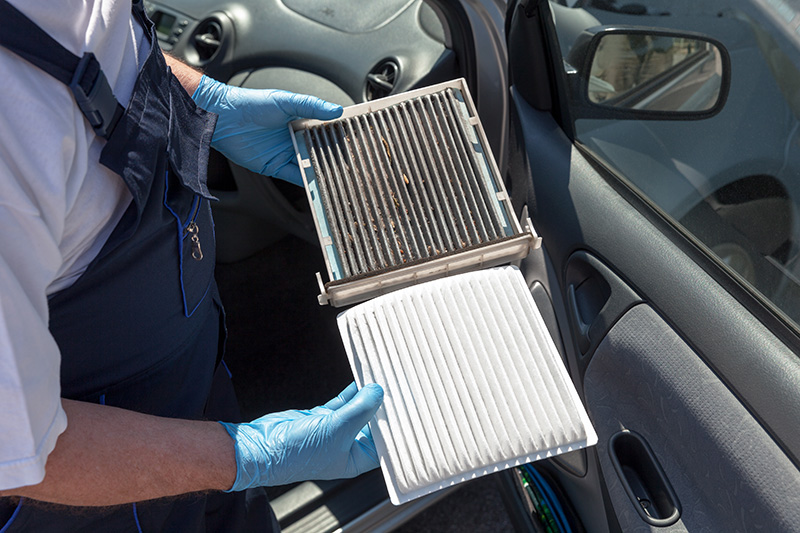
5. Dirty or Unpleasant Cabin Air
If your Ford’s cabin smells musty, or if you notice increased dust and allergens inside your vehicle, your cabin air filter may be overdue for replacement. This filter plays a crucial role in ensuring clean air circulation and removing pollutants before they enter your cabin.
6. Dark, Dirty, or Sludgy Oil
Your oil filter removes contaminants from engine oil, keeping it clean and effective. Over time, this filter becomes clogged, allowing dirty oil to circulate. If your oil appears excessively dark or thick when checking your dipstick, your oil filter may no longer be doing its job properly.
7. Engine Overheating
A clogged air filter can cause your engine to overheat due to restricted airflow. An overworked engine generates excess heat, leading to potential damage if left unaddressed. If your temperature gauge is running hotter than normal, it may be time for a filter inspection.
How Often Should You Replace Your Filters?
- Engine Air Filter: Typically every 12,000 to 15,000 miles or as recommended in your owner’s manual.
- Cabin Air Filter: Every 15,000 to 30,000 miles, or sooner if you drive in dusty conditions.
- Fuel Filter: Generally every 30,000 miles, but check your Ford’s specific maintenance schedule.
- Oil Filter: With every oil change to prevent contamination and ensure smooth engine performance.
Professional Filter Maintenance at Lufkin Ford
At Lufkin Ford, we offer comprehensive oil change services, including filter replacements to keep your Ford in peak condition. Whether it’s an engine air filter, cabin filter, or oil filter, our certified technicians will inspect and replace them as needed. Don’t wait until performance issues arise—schedule your filter maintenance today.
Connect with us


- July 2026
- June 2026
- May 2026
- April 2026
- March 2026
- February 2026
- January 2026
- December 2025
- November 2025
- October 2025
- September 2025
- August 2025
- July 2025
- June 2025
- May 2025
- April 2025
- March 2025
- February 2025
- January 2025
- December 2024
- November 2024
- October 2024
- September 2024
- August 2024
- July 2024
- June 2024
- May 2024
- April 2024
- March 2024
- February 2024
- January 2024
- December 2023
- November 2023
- October 2023
- September 2023
- August 2023
- July 2023
- June 2023
- May 2023
- April 2023
- March 2023
- February 2023